The Questy methodADHD and autism
Routines that help your child succeed and make family life easier.
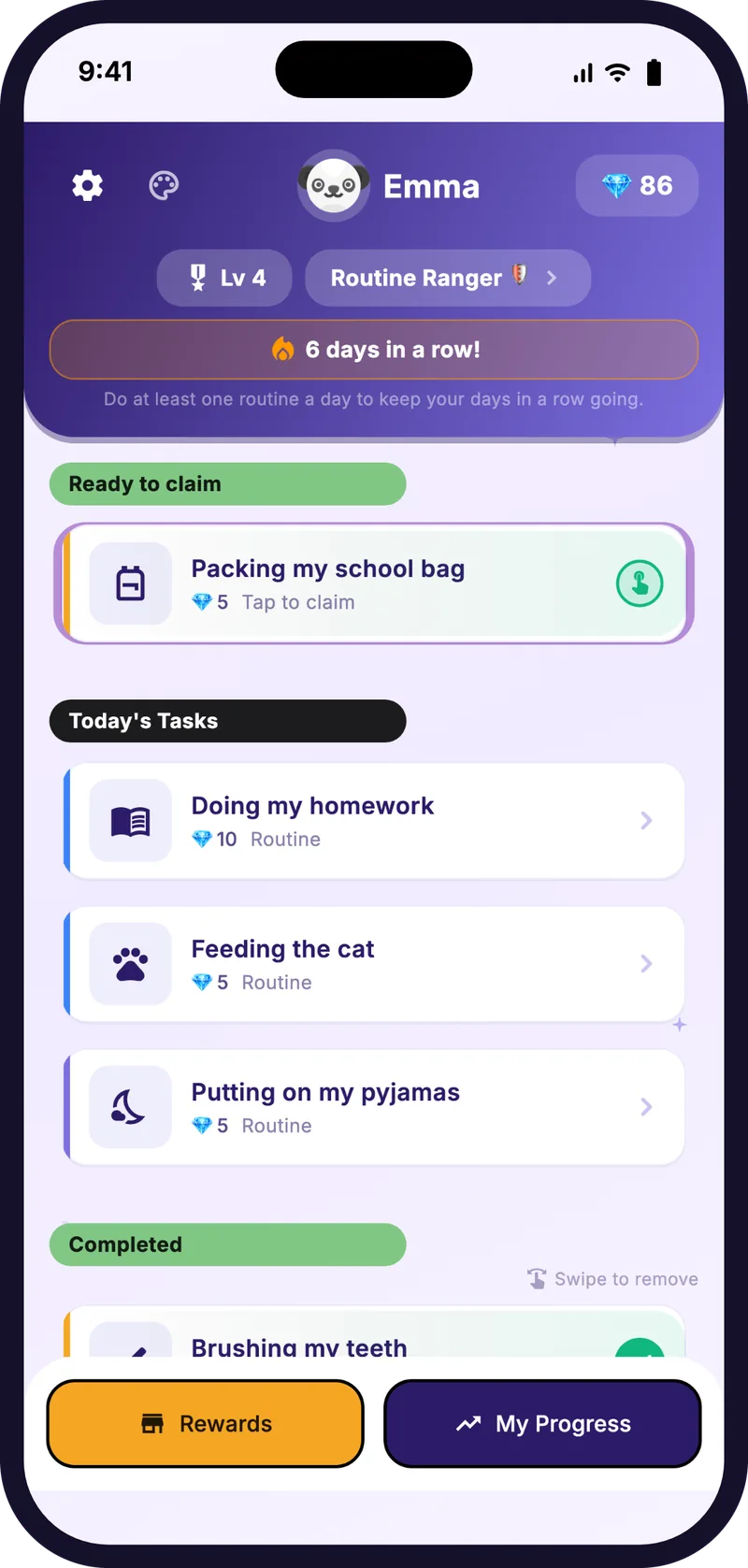
A plan your child can see for themselves, with points that keep them motivated along the way. Questy builds on well-known methods from behavioural psychology and on our own experience at home.
- Built on well-documented methods
- Developed by parents who have used them
- Made for children with ADHD and autism
From daily battles to the same team
It is rarely about willpower. It is about remembering, getting started and keeping track.
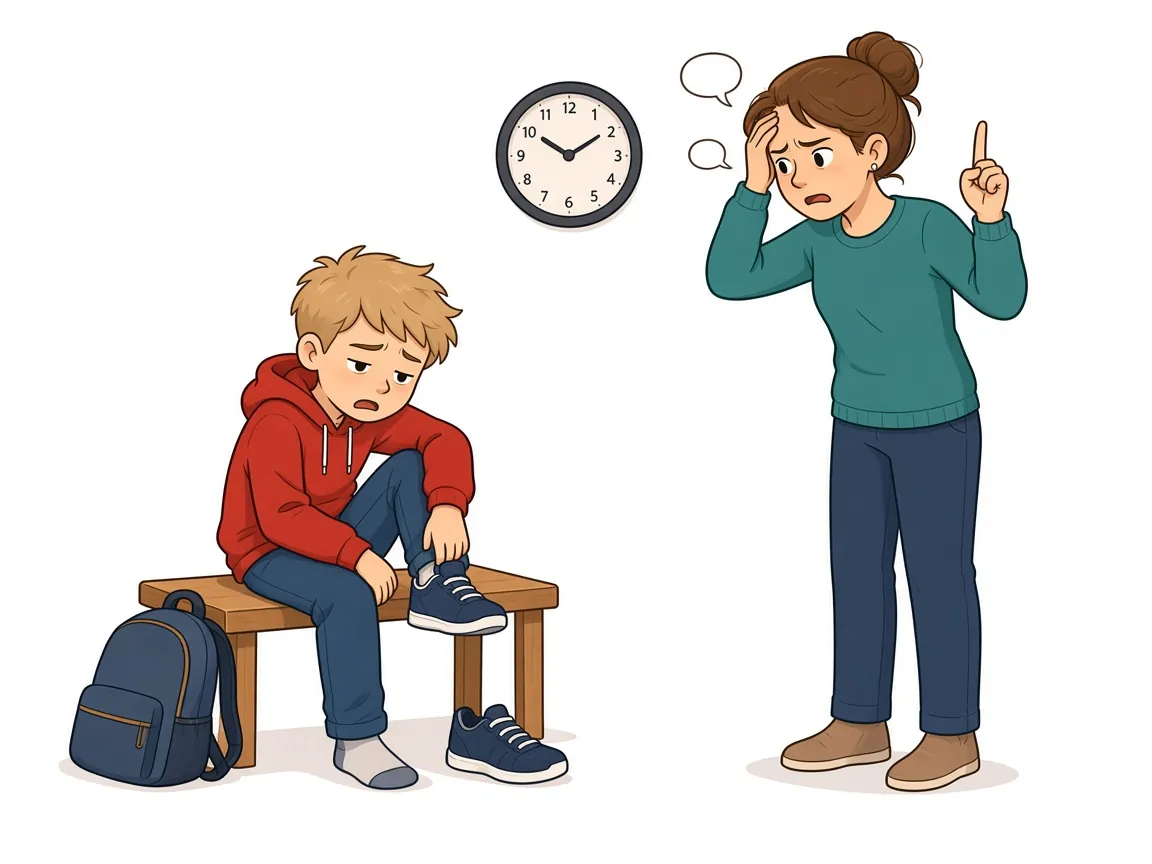
Before
- You keep the plan in your head and remind, again and again
- Your child feels corrected all day
- Small things turn into battles
With Questy
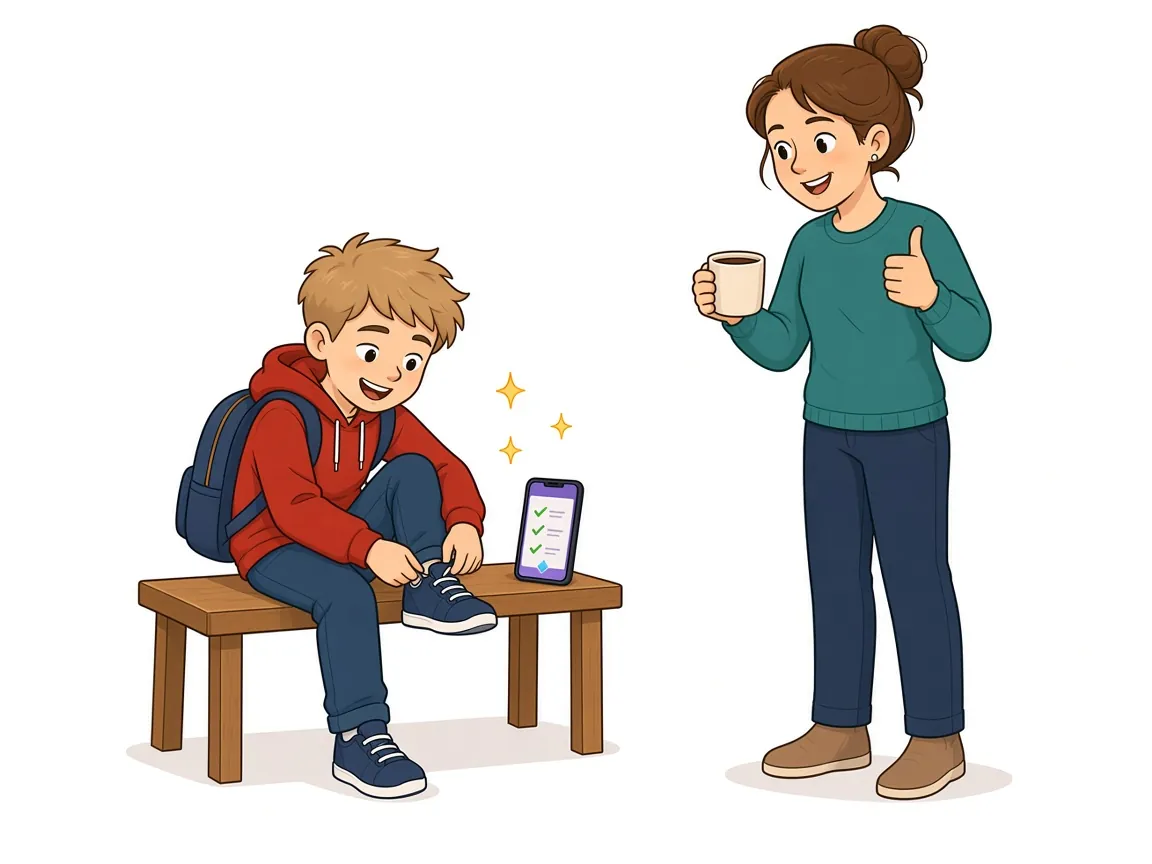
- The plan is visible, and the app does the reminding
- Your child takes charge of their own routines
- You cheer, and you are on the same team
- Get the toothbrush
- Add toothpaste
- Brush for two minutesRead aloud
- Rinse
A method that steps the help down
Lots of support at the start, then a little less each time your child manages. Fun tasks give easy points at first, so your child gets going. Then the points shift toward the routines that matter, and those keep their points.
- 1Getting goingPoints come easily
- 2A new routinePoints shift to what matters
- 3HabitsThe routine becomes their own
The research behind it
Questy is built on four well-documented methods from behavioural psychology and autism research.
Visual plans
The day as clear cards your child can see, instead of instructions to remember.
Visual activity schedules are considered evidence-based practice for autistic children and young people, and have been studied from preschool age to adulthood.
Points and rewards
Points straight away for what gets done, saved up for something you have agreed on together.
Points systems are among the most studied ways to support autistic children and children with ADHD. Rewards far in the future tend to motivate less with ADHD, so Questy gives points straight away.
Gradual step-down
Fun tasks give a little less over time, while the routines that matter keep their points.
Studies suggest that what a child has learned lasts better when rewards are reduced gradually rather than removed suddenly. Much of this research comes from clinical settings.
Small steps
Big tasks are split into small steps your child takes one at a time.
Breaking a task into steps (task analysis) is considered evidence-based practice for autistic children and young people, and is widely used to teach everyday skills.
The research is about the methods, not about Questy itself. Questy is a tool for families, not treatment. If you are worried about your child, talk to your doctor, school nurse or the school’s support services.
We have walked this road ourselves
We are parents of children with ADHD and autism. With guidance from professionals, we used this approach at home and saw our children take over more of their routines. Questy makes the same approach easy for other families.
Made in Norway, and tested with other families before launch.
How it works in practice
Setup takes about a minute.
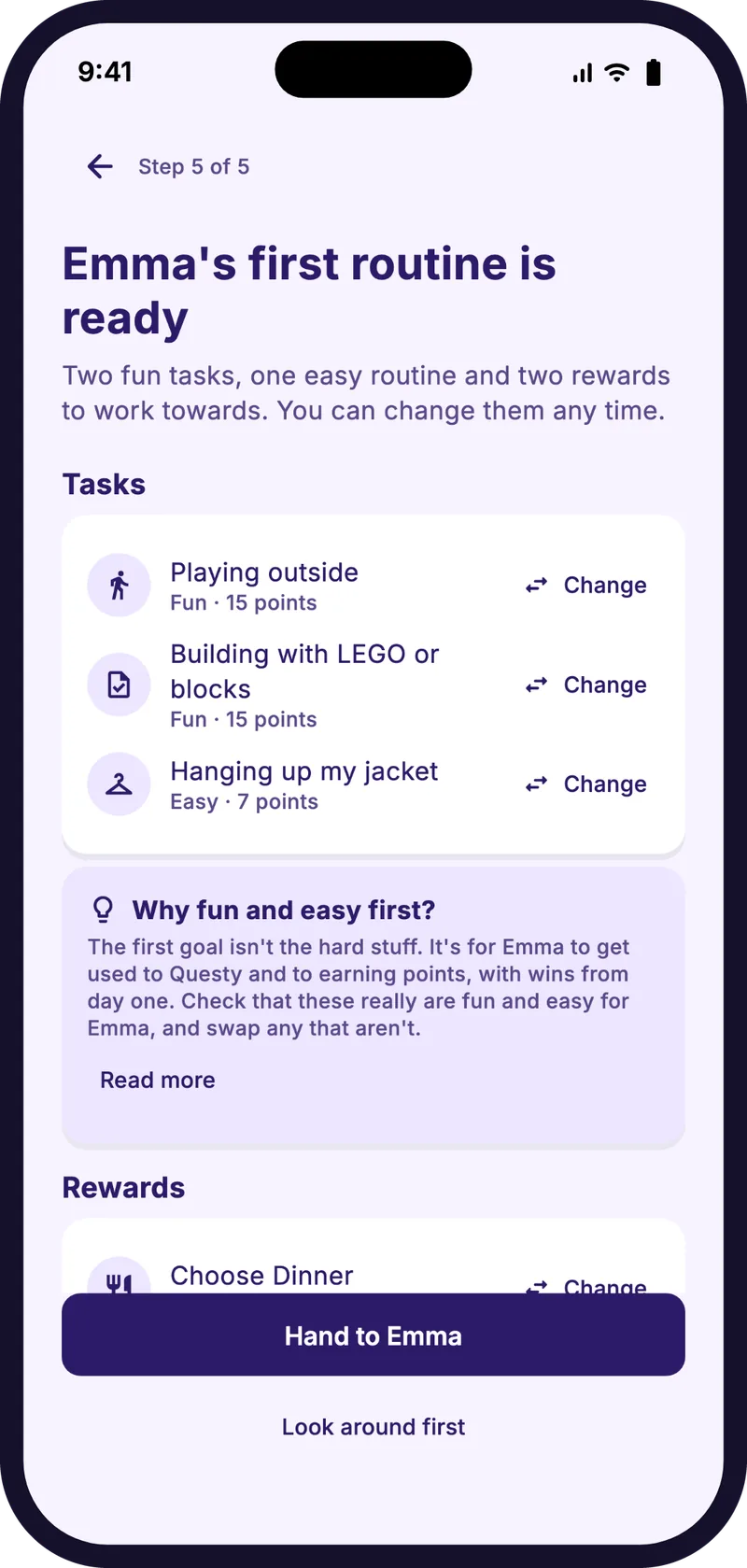 1
Tell Questy a little about your child
Questy suggests two fun tasks, one simple routine and two rewards. You can change everything later.
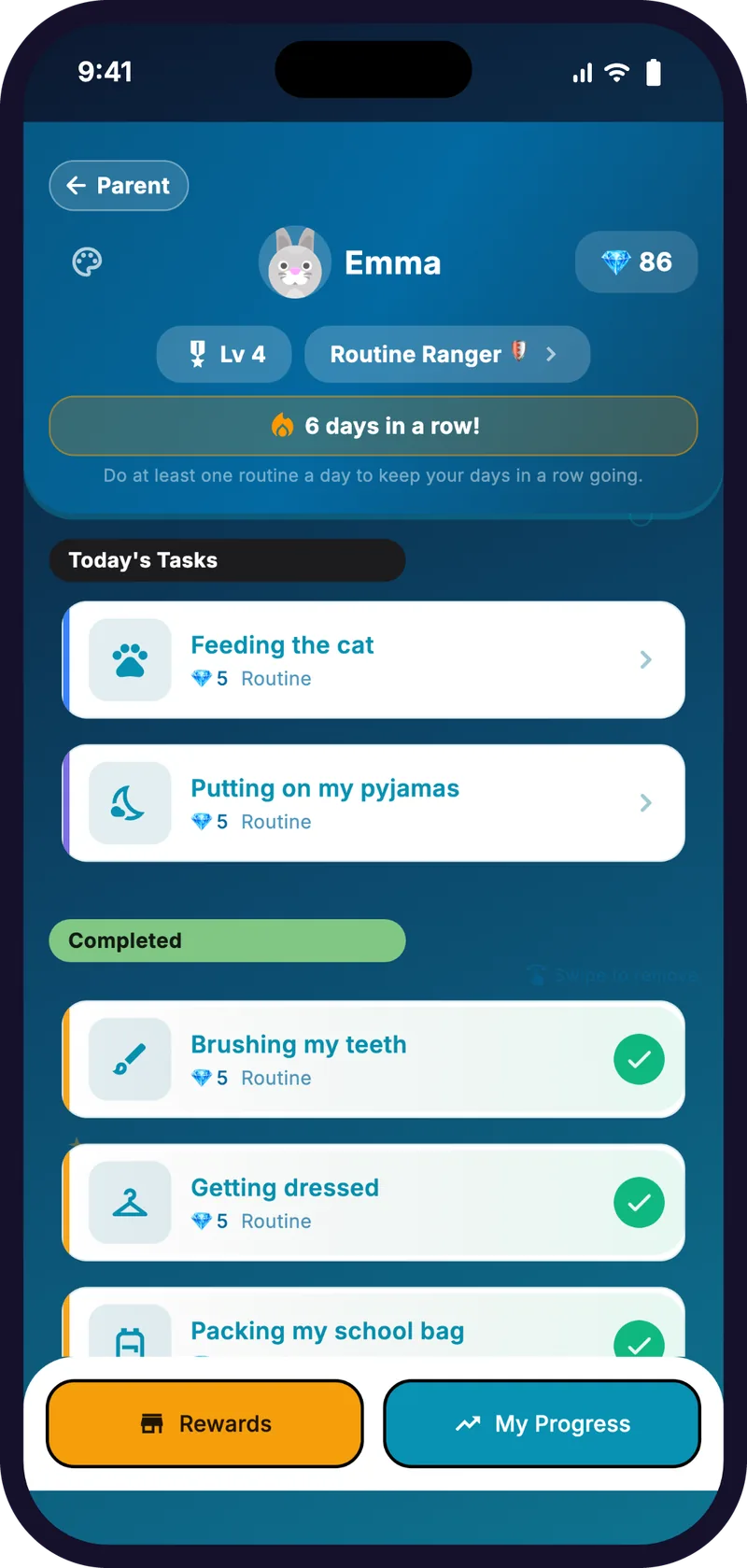 2
Hand your child your phone
Your child sees only their own tasks. When you want your phone back, tap Parent, with a PIN if you like.
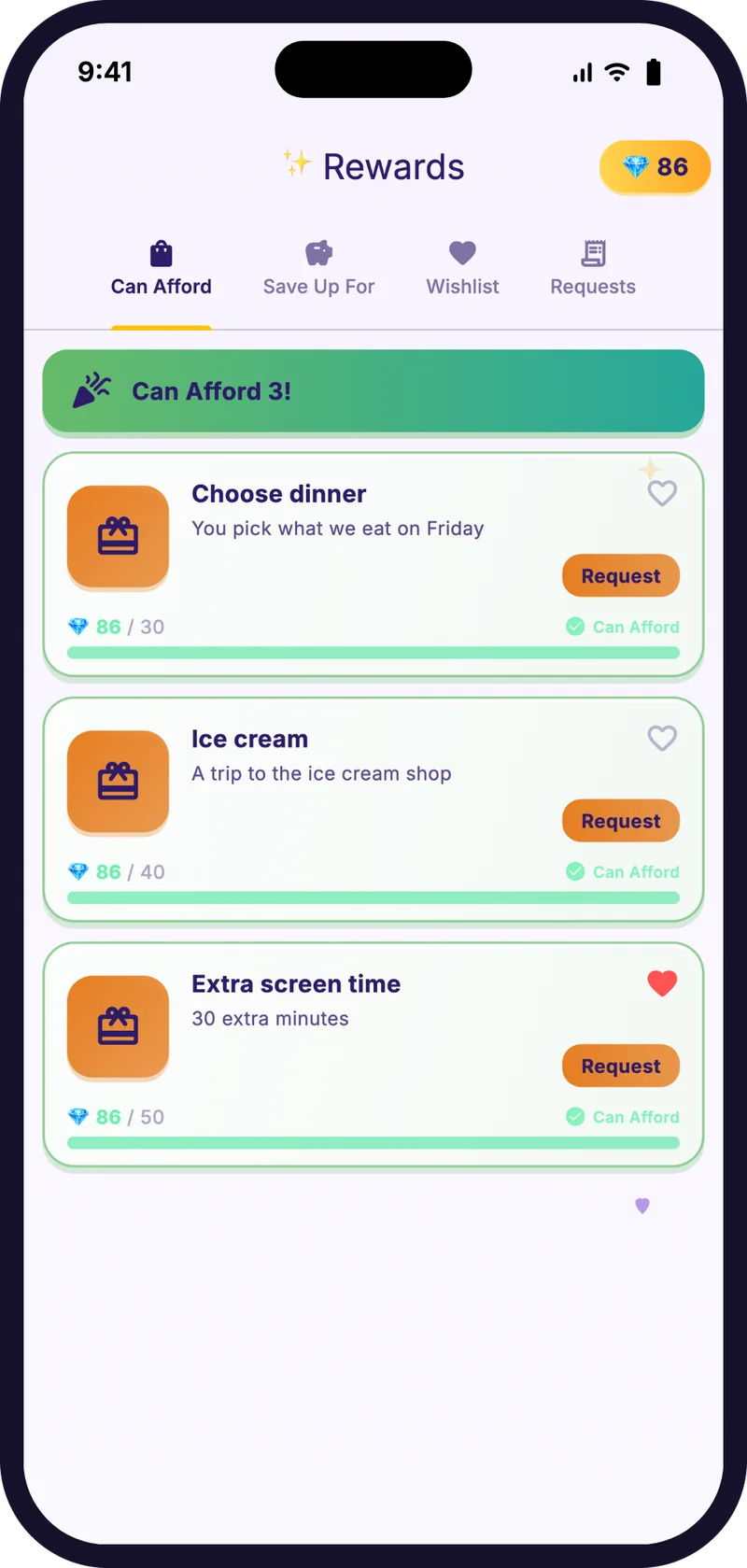 3
Your child does the routine
Your child swipes when a task is done, and collects points for what you have agreed on.
For your child
- Knowing what’s comingThe day is shown as clear cards, in the same order every day.
- Doing it themselves, one step at a timeBig tasks can be split into small steps: get the toothbrush, add toothpaste, brush for two minutes, rinse.
- Having a sayYour child chooses when to do a task, within a time window, and what to save points for.
- Seeing that it worksA small celebration for each task, and days in a row they can see. Sound and animation can be turned down or off.
- Help with readingTasks can be read aloud for children who don’t read yet.
For you
- You know your child bestQuesty suggests, you decide. Points and routines don’t change until you have said yes.
- You see how it’s going, without having to watchA short weekly review shows what is going well, and what might need a little attention.
- Hard days are part of lifeWith “Hard day”, Questy hides the steps you have marked as skippable, so your child only sees what matters most. Steady effort matters more than perfect weeks.
- Rewards you agree onSmall, medium and large, so there is always something within reach. You are the one who hands over the reward, so you can enjoy it together.
What parents say
These families tried Questy before launch.
What it costs
Free on your phone, for one child. Questy Family when your child gets their own phone or tablet.
Free
On your phone, for one child.
Questy Family
When your child uses their own phone or tablet.
Common questions
No. Questy is made with children with ADHD and autism in mind, but many children enjoy seeing the day clearly and managing a bit more on their own. You are just as welcome whether you are waiting for an assessment, have lived with a diagnosis for a long time or have no diagnosis at all.
Questy has routine suggestions for children from 5 and under to 13 and older. Children who don’t read yet can have their tasks read aloud.
That’s fine. Your child can use your phone. Tap “Hand to [name]” and your child sees only their own tasks. Tap Parent when you want your phone back, with a PIN if you like.
With Questy Family, your child can also use their own phone or tablet.
Questy has no ads and uses no advertising ID. On the free plan, your child’s name, tasks and points stay on your phone. With Questy Family they are stored securely, so your family’s devices stay up to date.
Questy is free on your phone, for one child. Questy Family starts with 14 days free, no card needed. After that you pay monthly or yearly, and the app shows the price where you live. You can cancel any time in the App Store or Google Play.
Start with one routine
Pick one thing, for example the morning, and see how the first week goes. It doesn’t have to be perfect. Starting is enough.